

EP364 AI & Your Personal Identifiable Information – What is PII Anomalyzer – With Bob Bergman
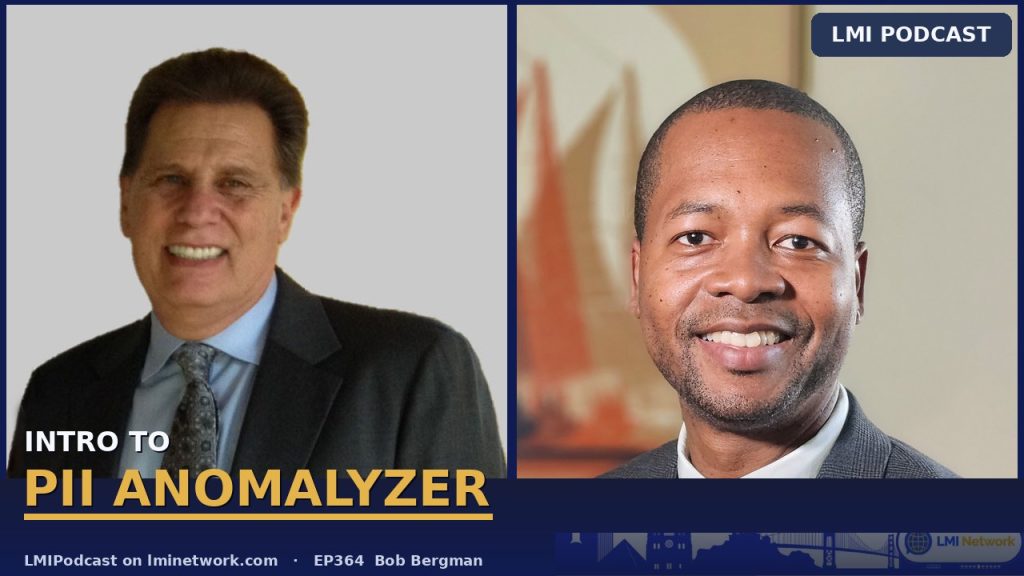
Most of us are already doing it: pasting a document into ChatGPT, Claude, or Gemini to get help fast, without stopping to think about what’s inside it. Names. Social Security numbers. Medical details. Client secrets. My returning guest built a tool for exactly that blind spot, and what he had to say about where your data actually goes should change how every lawyer, mediator, and everyday user works with AI.
Bob Bergman was last with me on EP241 back in March 2024, talking about Next Level Mediation, decision science, and AI in conflict resolution. We finally met in person at the NCTDR online-dispute-resolution conference at Harvard, where I sat in on his training for a new tool called PII Anomalyzer. This episode is that education, for everyone.
Listen below
Prefer audio? Hear the full conversation on your favorite app:
Spotify
Apple Podcasts
iHeart
Amazon Music
Who is Bob Bergman?
Bob brings a rare depth to this. He’s not shy to share his age of 79, and he encountered the very first AI chatbot decades ago at MIT in 1967. His background is mathematics and decision science, with a long run in the defense world and 28-plus years leading Intel’s decision science group. In other words, he has been thinking about how people decide, and disagree, for a very long time.
Why PII Anomalyzer exists
As he shared, when Bob’s team introduced AI into mediation at the end of 2022, before almost anyone else, they ran into resistance rooted in a fear of losing confidentiality. At first it felt like just a feeling. Over time, he says, they realized it was a reality. So they built software to strip personally identifiable information out of a document, so you can safely hand the rest to an AI.
What it actually does
PII Anomalyzer runs on your own computer. You import a file (PDF, Word, Excel, even images and scanned documents), and it extracts the text and automatically finds anything that could identify a person: government IDs, health information, locations, license plates, banking details, and more, even a name embedded inside an image. From there you choose how to handle it. You can highlight it, redact it (useful for court filings and email), or, the powerful option for AI, replace it with placeholders that are semantically consistent, “Person 1,” “Social Security Number 1,” so the document still makes sense to an AI without exposing the real data. When the AI answers, you paste its response back into the tool and re-identify it, restoring the real names locally. As Bob notes, it takes milliseconds, because the data never left your computer. It’s been trained on over 11,000 forms, and it uses two AI models, one for name recognition and one for context, to score its confidence (his example: the word “bank” can mean a riverbank, a financial institution, or a turn in an airplane).
The part most people miss
Here’s the warning worth the whole episode. We’ve all been trained to ask one question about AI: “Will it train on my data?” Bob’s answer is blunt. Not training on your data is about five percent of the risk. The real problem is that your information is stored, and if the provider is subpoenaed, they have to produce it. Your contract is with the AI company, not with its subprocessors, the data centers, cloud providers, and safety reviewers who can also touch your prompt, and who can change at any time. His conclusion: “There is no privileged information anymore. You’ve lost control by definition.” The only way to guarantee that sensitive information has been removed is to remove it yourself, on your own machine, before anything goes to the cloud.
Why this is urgent
Bob has a line I won’t forget: technology advances at the speed of engineering, and regulation advances at the speed of politics, which tends to run 20 to 25 years behind. Meanwhile the stakes are real. A single HIPAA violation can run $50,000 and carry potential criminal exposure, and courts have their own redaction rules for names, Social Security numbers, EINs, VINs, and children’s initials. The compliance-heavy fields, healthcare, finance, law, and mediation, are the ones most exposed, though anyone protecting their own information benefits.
Try it, and what’s next
There’s a seven-day free trial for Windows and Mac at PIIAnomalyzer.ai (it’s a sizable download, around 3.5 GB, because the AI models run locally). A Pro version is coming that adds a command-line and MCP interface, so an AI assistant like Claude can call the tool directly, for example, “look at this folder and tell me if there would be any HIPAA violations,” with guardrails so nothing un-de-identified ever leaves your machine.
And the frontier Bob is already watching: a growing gap between agentic AI and insurance. Major carriers are adding exclusion clauses for work done by autonomous AI agents, which means the errors-and-omissions coverage many professionals rely on may not cover what their AI agent does. It’s the subject of his latest article, and it’s a preview of a lot of conflict to come.
“Technology advances at the speed of engineering. Regulation advances at the speed of politics.” — Bob Bergman
Learn more
- PII Anomalyzer: piianomalyzer.ai (7-day free trial, Windows + Mac)
- Bob’s article, “Agentic AI: Emerging Insurance Coverage”: on LinkedIn
- Bob on LinkedIn: Robert Bergman
- His first appearance, EP241: Effective Use of AI and Decision Science in Mediation
Want to be a guest? Visit lminetwork.com/prepare.
